Traffic Rules: Complete Guide Every Driver Should Know
Essential traffic rules include obeying signs and signals, following speed limits, and wearing seat belts. Drivers should also maintain a safe distance, yield when required, and watch for pedestrians and cyclists.
Traffic rules help organize road use and make driving more predictable. Although many rules are similar across the United States, some requirements vary by state. Check your state’s current driver handbook for local laws.
What Are Traffic Rules and Why Are They Important?
Traffic rules are instructions and legal requirements that guide how drivers, pedestrians, cyclists, and other road users behave. They help organize traffic, reduce confusion, and lower the risk of collisions on roads, highways, and at intersections.
These rules include obeying traffic signals, following speed limits, wearing seat belts, yielding when required, and using lanes correctly. Road signs, traffic lights, pavement markings, and local laws help people understand what they should do in different driving situations.
Reduce Collisions
Consistent driving behavior helps road users anticipate one another’s movements and respond to hazards.
Organize Traffic
Signs, signals, and lane markings help manage traffic flow at intersections, roadworks, and busy roads.
Protect Road Users
Traffic rules help protect drivers, passengers, pedestrians, cyclists, and roadside workers.
Explain Driver Responsibilities
Traffic laws establish requirements for speed, yielding, parking, and other driving activities.
Who Must Follow Traffic Rules?
Traffic rules apply to different road users according to their activities and the laws in their area.
- Drivers: Must obey traffic signals, speed limits, lane markings, and right-of-way requirements.
- Pedestrians: Must follow applicable crossing signals and pedestrian rules.
- Cyclists: Must follow applicable traffic laws and use the road safely.
- Motorcyclists: Must obey traffic controls and ride with appropriate care.
In the United States, the Federal Highway Administration’s Manual on Uniform Traffic Control Devices (MUTCD) establishes national standards for traffic-control devices. States and local authorities implement applicable requirements through their own laws and regulations.
View the current MUTCD →Traffic requirements can differ by state and locality. Learning the basic principles is a useful starting point, but drivers should check their official state driver handbook for the rules that apply where they drive.
Basic Traffic Rules Every Driver Should Follow
Safe driving starts with a few basic habits. Drivers should understand traffic signs, maintain a safe speed, avoid distractions, use signals correctly, and stay aware of other road users. Some practices are legal requirements, while others are safety recommendations that help prevent collisions.
Obey Traffic Controls
Follow traffic lights, stop signs, yield signs, and posted instructions. Check the intersection before proceeding.
Follow Speed Limits
Stay within the posted limit and slow down further when weather, traffic, visibility, or road conditions require it.
Wear Seat Belts
Fasten your seat belt before driving and make sure passengers use appropriate restraints as required by law.
Avoid Distractions
Keep your attention on driving. Put away your phone and set navigation before moving whenever possible.
Never Drive Impaired
Alcohol, drugs, and some medications can affect judgment, coordination, and reaction time. Do not drive when impaired.
Use Turn Signals
Signal in advance before turning or changing lanes, following the timing requirements that apply locally.
Leave Enough Space
Maintain enough distance to react and stop safely. Increase the gap in rain, fog, or heavy traffic.
Yield When Required
Give priority to other vehicles, pedestrians, or cyclists when traffic controls or applicable laws require it.
Check Blind Spots
Check mirrors and blind spots before merging, changing lanes, or moving away from the curb.
Use Headlights Correctly
Use headlights at night and when visibility is reduced. Follow local requirements for rain and wiper use, and dim high beams for oncoming traffic.
Adjust Your Driving to Road Conditions
A posted speed limit is not a guarantee that the same speed is safe in every situation. Rain, fog, roadwork, congestion, and limited visibility may require you to slow down and leave more space ahead.
Some traffic rules are legally enforceable, while other recommendations describe safer driving habits. Requirements vary by state, so use your official driver handbook to confirm local laws.
Traffic Sign and Signal Rules
Traffic signs, lights, and pavement markings tell drivers when to stop, where they can travel, and which hazards to expect. Understanding these controls helps you respond correctly at intersections, on highways, in school zones, and around roadwork.
Regulatory Signs
Regulatory signs communicate traffic requirements and restrictions. Drivers must follow the instructions that apply to their direction of travel and location.
Come to a complete stop at the required stopping point and proceed when permitted and safe.
Slow down and give priority to traffic or other road users who have the right of way.
Do not exceed the posted maximum, and reduce speed further when conditions require it.
Do not enter the road or roadway entrance from that direction.
Do not turn on a red signal where a posted sign prohibits that movement.
Additional signs may specify time restrictions, vehicle restrictions, lane requirements, or exceptions. Read the full sign rather than relying on its main wording alone.
Warning Signs
Warning signs alert drivers to possible hazards ahead. They may identify sharp turns, merging traffic, slippery roads, pedestrian crossings, school zones, or changes in the road layout.
Reduce speed when necessary, increase your following distance, and look for hazards that may require a change in speed or position. A warning sign alerts you to a condition; it does not always mean you must stop.
Traffic Light Rules
Traffic signals assign movement and stopping instructions. Always check the intersection and follow any signs that restrict a turn or movement.
Rules for turning right on red and other signal movements vary by location. Check your state’s handbook for exact requirements.
See California DMV traffic signal guidance →Road Markings
Pavement markings identify lanes, passing restrictions, stopping points, and pedestrian crossings. Follow the markings for your lane and direction of travel.
Generally separate lanes moving in the same direction and allow lane changes when safe and permitted.
Separate lanes moving in the same direction. Crossing may be discouraged or restricted depending on the marking and location.
Separate traffic moving in opposite directions.
Passing may be permitted when visibility, road conditions, and applicable laws allow it.
Generally restrict crossing to pass, subject to specific legal exceptions and local rules.
Show where vehicles should stop and where pedestrians may cross.
Traffic Sign Shapes and Colors
Recognizing common sign shapes and colors can help drivers identify the type of instruction quickly. Always read the sign itself, as colors and shapes are clues rather than a replacement for its message.
Traffic-control details and legal requirements can vary by state and location. Follow posted signs and signals, and consult official guidance when a rule is unclear.
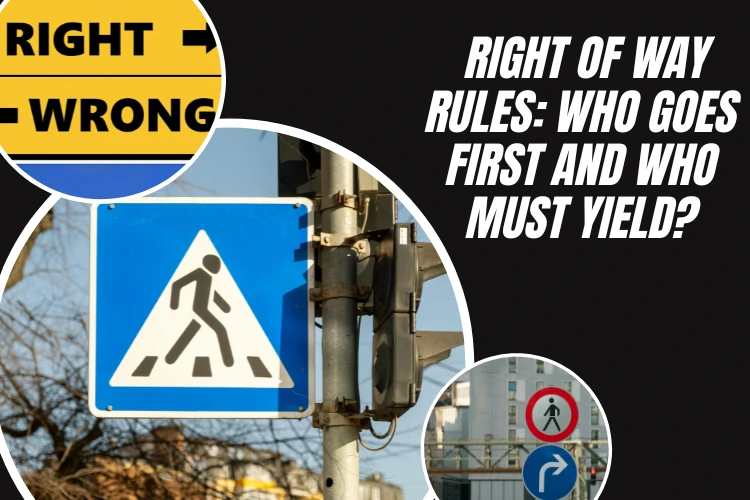
Right-of-Way Rules: Who Goes First?
Right-of-way rules explain who should proceed first when vehicles, pedestrians, and cyclists meet. They help prevent conflicting movements at intersections, during turns, and when vehicles enter or merge onto roads.
The correct response depends on traffic signals, signs, road markings, and the situation. Even when you believe you have priority, check that your path is clear before moving.
Follow Traffic Controls
Obey stop signs and signals. At an all-way stop, the vehicle that stops first generally proceeds first, while tie-breaking rules depend on local law.
Yield When Required
Drivers turning left generally yield to oncoming traffic with priority and must watch for pedestrians crossing their path.
Find a Safe Gap
Follow merge signs and yield as required when entering another road. Adjust your speed and merge only when safe.
Check Circulating Traffic
Entering traffic generally yields to vehicles already circulating. Follow lane signs and give way to pedestrians where required.
Make Room Safely
Follow the rules for approaching emergency vehicles and move aside when required and safe. Observe Move Over requirements where applicable.
Follow Bus Signals
Obey school bus warning lights and stop-arm requirements according to the laws for that road and state.
What If You Are Unsure Who Has the Right of Way?
Do not guess or rush into the intersection. Reduce speed, check traffic controls, look for pedestrians and cyclists, and wait until you can proceed legally and safely.
- Check for vehicles or pedestrians already in the intersection.
- Follow any stop, yield, or turn restrictions that apply.
- Signal your intentions and avoid sudden movements.
- Do not assume another driver will yield just because you expect them to.
Right-of-way rules can be more complicated at four-way stops, uncontrolled intersections, pedestrian crossings, and during turns.
Read our complete Right-of-Way Rules guide →These are general principles. Always follow the current traffic laws and posted controls in your state.
Lane and Turning Rules Drivers Must Know
Correct lane use and careful turning help drivers move predictably and avoid conflicts with nearby vehicles, cyclists, and pedestrians. Before changing lanes or turning, check traffic, use your signals, and follow road markings and posted restrictions.
Changing Lanes Safely
Before changing lanes, check your mirrors and blind spots, signal in advance, and make sure there is enough room to move without forcing another driver to brake or swerve.
- Check traffic behind and beside your vehicle.
- Signal before moving into another lane.
- Check blind spots immediately before moving.
- Move smoothly and avoid sudden lane changes.
Turning at Intersections
Choose the correct lane before reaching the intersection. Signal in advance, slow down as needed, and follow traffic lights, turn arrows, and lane markings.
- Check for pedestrians and cyclists before completing the turn.
- Yield to oncoming traffic when required for a left turn.
- Follow posted restrictions on turning right or left.
- Turn into the legally appropriate lane and avoid cutting across traffic.
Passing Other Vehicles
Pass another vehicle only when passing is legal, visibility is sufficient, and there is enough space to complete the maneuver safely.
- Check road markings and signs for passing restrictions.
- Make sure you can see far enough ahead to complete the maneuver.
- Check for oncoming traffic and vehicles approaching from behind.
- Return to your lane only when there is sufficient clearance.
U-Turn Rules
A U-turn changes your direction of travel and can cross the path of other vehicles. Make one only where permitted and when you can complete it safely.
- Check for signs that prohibit U-turns.
- Make sure you have adequate visibility and space.
- Yield to other road users when required.
- Follow state and local restrictions on where U-turns are allowed.
Follow Lane Markings
Lane markings show where vehicles should travel and may restrict when or where a driver can change lanes, turn, or pass.
- Follow arrows showing permitted lane movements.
- Respect solid lines and other lane restrictions.
- Avoid weaving between vehicles or making unnecessary lane changes.
- Watch for lanes that end, merge, or become turn-only lanes.
Check your mirrors, signal your intentions, check blind spots, and make sure there is enough space. Traffic laws and specific lane requirements vary by location, so always follow the signs and markings on the road.
Speed Limits and Following Distance
Speed limits help drivers travel at a speed that is appropriate for the road and surrounding conditions. Following the posted limit is important, but drivers must also slow down when traffic, weather, visibility, or road conditions make the limit unsafe.
Follow Posted Limits
Watch for speed limit signs and adjust your speed when entering a new road, school zone, work zone, or residential area.
Leave Enough Space
Keep enough distance behind the vehicle ahead so you have time to react and stop safely if traffic suddenly slows.
Adjust to Conditions
Reduce speed in rain, fog, snow, heavy traffic, or on slippery roads, even when the posted limit is higher.
Use the Three-Second Rule
In good driving conditions, choose a fixed roadside point. When the vehicle ahead passes it, count at least three seconds before your vehicle reaches the same point. Leave more space at higher speeds or in poor conditions. Local guidance may recommend a longer interval.
Remember: Driving below the speed limit does not automatically make driving safe. Choose a speed that lets you maintain control and respond to hazards.
Parking Rules Every Driver Should Know
Parking rules help keep roads accessible, protect pedestrians, and maintain clear routes for emergency vehicles. Before leaving your vehicle, check signs, road markings, local restrictions, and the position of nearby driveways or intersections.
Check Parking Signs
Read restrictions carefully, including time limits, permit requirements, payment rules, and days when parking is prohibited.
Keep Access Clear
Avoid blocking driveways, pedestrian crossings, sidewalks, fire hydrants, or emergency access points where prohibited.
Park Considerately
Position your vehicle within the marked space, avoid taking up multiple spaces, and leave enough room for other road users.
Secure Your Vehicle
Apply the parking brake, select the appropriate gear or park mode, switch off the engine when required, and check for approaching traffic before opening the door.
Where Should You Avoid Parking?
- In areas marked as no-parking or no-stopping zones.
- Where your vehicle would obstruct a junction, crossing, or clear view of the road.
- In spaces reserved for accessible parking unless you meet the local requirements.
- Where your vehicle blocks emergency access or creates a safety hazard.
Important: Exact parking distances, restrictions, and penalties vary by location. Always follow local traffic laws and the signs posted on the road.
Pedestrian and Bicycle Safety Rules
Pedestrians and cyclists are more vulnerable than people inside vehicles. Drivers should stay alert, give them adequate space, and follow local rules at crossings, intersections, cycle lanes, and shared roads.
Protect Pedestrians
Slow down near crossings, check for people before turning, and yield when required by law. Never assume a pedestrian has seen your vehicle.
Give Cyclists Space
Check mirrors and blind spots before changing lanes or opening a door. Pass cyclists only when it is safe and with the clearance required locally.
Cross Carefully
Use designated crossings where available, obey pedestrian signals, and look for vehicles in every direction before crossing.
Stay Visible
Use required lights and reflectors, signal turns when appropriate, obey traffic signals, and travel in the direction required by local law.
Extra Care at Intersections
Intersections can create blind spots and conflicting movements. Before turning, check for pedestrians crossing the road, cyclists approaching alongside your vehicle, and people who may be hidden by parked cars. Signal early and make the turn only when the path is clear.
Safety reminder: Avoid distractions and never rely only on another road user’s signal or movement. Confirm that the road is clear before proceeding.
Rules for Emergency Vehicles and School Buses
Emergency vehicles and school buses require extra attention because they may be responding to urgent incidents or carrying children. Drivers must recognize warning signals, remain calm, and follow the specific traffic rules that apply in their location.
When an Emergency Vehicle Approaches
- Check mirrors and surroundings to identify where the vehicle is coming from.
- Move aside or pull over when required and safe, following local law.
- Do not stop in the middle of an intersection or block the emergency vehicle’s route.
- Never follow closely behind an emergency vehicle to move through traffic.
- Return to normal driving only after it is safe to do so.
When a School Bus Stops
A stopped school bus may be loading or unloading children. Watch for flashing lights, stop arms, and children near the roadway. The required response depends on local law and the road layout.
- Slow down as you approach a school bus and be prepared to stop.
- Stop when required by the bus’s signals and applicable law.
- Watch carefully for children crossing in front of or behind the bus.
- Do not move until the bus signals and the roadway is safe, as required by local rules.
Important: School bus stopping requirements differ between jurisdictions, including rules for roads with divided medians. Learn the requirements where you drive rather than assuming the same rule applies everywhere.
Highway and Freeway Driving Rules
Highways and freeways allow traffic to move at higher speeds, so drivers need to plan ahead, maintain safe gaps, and make lane changes carefully. Follow posted signs and local rules, especially when entering, exiting, or driving near stopped vehicles.
Merge Safely
Use the entrance ramp to build an appropriate speed, check mirrors and blind spots, signal, and merge when a safe gap is available.
Keep a Safe Gap
Leave enough following distance to react to sudden braking. Increase the gap when visibility, weather, or road grip is poor.
Change Lanes Carefully
Signal in advance, check mirrors and blind spots, and move only when there is enough room. Avoid unnecessary weaving between lanes.
Exit in Good Time
Read overhead signs early, move into the correct lane safely, and reduce speed on the exit ramp as indicated by signs and conditions.
What to Do if Your Vehicle Breaks Down
If possible, move to a safe location away from moving traffic and follow local roadside-emergency guidance. Turn on hazard lights when appropriate. Avoid standing in active traffic lanes, and contact roadside assistance or emergency services if needed.
Highway Habits to Avoid
- Driving too fast for traffic or weather conditions.
- Using a phone or becoming distracted while driving.
- Following another vehicle too closely.
- Making sudden lane changes without checking blind spots.
- Stopping on the shoulder except when necessary or permitted.
Remember: Use the left or right lane according to local traffic rules, keep overtaking maneuvers predictable, and never reverse or make a U-turn on a highway unless specifically directed by authorized personnel.
Distracted Driving Rules
Distracted driving happens when a driver’s attention moves away from the road. Even a brief distraction can delay reaction time, affect judgment, and increase the risk of a collision. Drivers should remain focused on traffic, road signs, pedestrians, and changing road conditions.
Avoid Phone Use
Do not text, browse, or handle your phone while driving. Follow local laws on handheld devices and hands-free systems.
Set Up Before Driving
Choose your route, adjust mirrors, set climate controls, and secure loose items before moving the vehicle.
Keep Your Eyes on the Road
Avoid looking at passengers, food, navigation screens, or other objects for extended periods while the vehicle is moving.
Pull Over if Needed
If you need to respond to a message, change settings, or handle an urgent task, stop in a safe and legally permitted location first.
Common Types of Driver Distraction
- Visual: Taking your eyes away from the road.
- Manual: Removing your hands from the controls to perform another task.
- Cognitive: Letting your attention drift away from driving.
Remember: Using a hands-free device does not eliminate mental distraction. The safest approach is to give driving your full attention.
Seat Belt and Child Safety Rules
Seat belts and appropriate child restraints help reduce the risk of serious injury in a crash. Drivers should make sure passengers are properly secured before starting a journey and follow the seat belt and child passenger laws that apply in their area.
Wear Your Seat Belt
Wear the lap belt low across your hips and the shoulder belt across your chest. Never place the shoulder belt behind your back or under your arm.
Use the Right Child Seat
Choose a child restraint appropriate for the child’s age, height, and weight, following the seat manufacturer’s instructions and local requirements.
Check Installation
Make sure the child seat is secured correctly and the harness fits snugly. Follow the vehicle and restraint manuals.
Secure Every Passenger
Check that everyone is properly restrained before moving. Passengers in rear seats should follow the same safety precautions and applicable laws.
Common Seat Belt Mistakes
- Driving with a twisted or incorrectly positioned seat belt.
- Allowing a child to use an adult seat belt before it fits properly.
- Using a damaged restraint or one that has not been installed according to its instructions.
- Holding a child on a passenger’s lap instead of using an appropriate restraint.
Safety reminder: Never assume an airbag replaces a seat belt. Follow your vehicle manual and local child passenger safety requirements, including rules for rear-facing seats and front-seat placement.
Driving Under the Influence of Alcohol or Drugs
Alcohol, recreational drugs, and some prescription or over-the-counter medicines can affect a person’s ability to drive safely. They may reduce concentration, slow reactions, impair coordination, and make it harder to judge speed or distance.
Never Drive Impaired
Do not drive after drinking alcohol or using drugs that affect alertness, judgment, or coordination.
Check Medication Warnings
Read labels and ask a pharmacist or healthcare professional whether a medicine can cause drowsiness or affect driving ability.
Plan a Safe Journey
Arrange a sober driver, taxi, rideshare, or public transport before drinking or taking anything that may impair you.
Why Impaired Driving Is Dangerous
Safe driving requires drivers to recognize hazards, make quick decisions, and control the vehicle accurately. Impairment can affect several of these abilities at once, increasing danger for passengers, pedestrians, cyclists, and other road users.
Important: Legal limits and penalties differ by jurisdiction, and being below a legal alcohol limit does not guarantee that someone is safe to drive. If you may be impaired, do not drive.
Traffic Rules in Bad Weather
Rain, fog, snow, ice, and strong winds can make driving more difficult. Poor weather reduces visibility or tire grip and can increase stopping distances. Drivers should slow down, increase following distance, and avoid unnecessary journeys when conditions are dangerous.
Driving in Rain
Reduce speed, use appropriate lights, increase following distance, and avoid sudden braking or steering on slippery roads.
Driving in Fog
Slow down, use low-beam headlights where appropriate, and leave enough room to stop within the distance you can see clearly.
Driving on Snow or Ice
Accelerate and brake gently, avoid abrupt turns, and use suitable tires or equipment when required by conditions or local law.
Driving in Strong Winds
Keep both hands on the wheel when needed, anticipate gusts in exposed areas, and be especially careful when passing larger vehicles.
Before You Drive in Poor Weather
- Check weather forecasts and official road advisories.
- Make sure your tires, brakes, wipers, and lights are in good condition.
- Clear your windows and mirrors so you have a full view of the road.
- Allow extra travel time and avoid rushing.
- Stop somewhere safe if conditions become too dangerous to continue.
Remember: Posted speed limits are not targets in poor weather. Choose a safe speed for the available visibility, road grip, and traffic conditions.
Common Traffic Rule Violations and Their Consequences
Traffic violations occur when drivers fail to follow road laws, signs, signals, or safety requirements. Depending on the offense and local law, consequences may include fines, penalty points, license suspension, increased insurance costs, or criminal charges.
| Common Violation | Potential Risk | Possible Consequence |
|---|---|---|
| Speeding | Less time to react and longer stopping distance | Fine, penalty points, or other legal action |
| Running a red light | Collision with crossing or turning traffic | Fine or more serious penalties, depending on the circumstances |
| Phone use while driving | Missed hazards and delayed reactions | Fine, penalty points, or license consequences |
| Driving while impaired | Poor judgment, coordination, and control | Severe penalties, possible arrest, or license suspension |
| Illegal parking | Blocked access or reduced visibility | Fine, penalty, or vehicle removal where authorized |
| Failing to yield | Conflict with pedestrians or other vehicles | Fine or other penalties under local law |
How to Avoid Traffic Violations
- Learn the traffic laws that apply where you drive.
- Pay attention to signs, signals, lane markings, and temporary road restrictions.
- Keep your vehicle documents, registration, and required safety equipment up to date.
- Avoid speeding, distractions, and unsafe maneuvers.
- Stay calm and make safe decisions instead of reacting aggressively to other drivers.
Note: This table gives general examples, not a list of fixed fines. Specific penalties vary by country, state, offense severity, and driving history. Check the relevant official traffic authority for current requirements.
Traffic Rules That Can Differ by State
Although many traffic rules are similar across the United States, some requirements vary by state or locality. A rule that applies in one state may be different in another, so drivers should learn the requirements for every area where they plan to drive.
Speed Limits and Penalties
Speed limits, school-zone requirements, work-zone rules, and penalties for speeding can differ depending on the state and road type.
Phone and Distracted Driving
States may have different restrictions on handheld phones, texting, and hands-free device use while driving.
Parking Restrictions
Local rules can determine where parking is allowed, how far vehicles must remain from certain features, and when parking restrictions apply.
Seat Belts and Child Restraints
Requirements for seat belts, child safety seats, and passenger age or seating positions may vary by jurisdiction.
How to Check the Rules in Your State
- Read your state’s official DMV driver handbook.
- Check the state transportation department’s website for current requirements.
- Pay attention to posted signs and temporary traffic instructions.
- Review local rules when driving in unfamiliar cities or jurisdictions.
Remember: General driving guides are useful for learning, but they do not replace current state or local laws. Confirm the official requirements before relying on a specific rule.
Traffic Rules vs. Traffic Laws
In everyday language, “traffic rules” and “traffic laws” are often used interchangeably. Both terms relate to how people should use roads safely, but it is useful to distinguish general safe-driving advice from requirements that are legally enforceable.
Guidance for Safer Driving
Traffic rules can include practical recommendations that help drivers reduce risk and make predictable decisions.
- Leaving extra following distance in poor weather.
- Checking blind spots before changing lanes.
- Planning a route before starting a trip.
Legally Enforceable Requirements
Traffic laws establish legal duties for drivers and other road users. Violations may lead to penalties under applicable law.
- Following posted speed limits.
- Stopping as required at stop signs and red lights.
- Complying with applicable seat belt and phone-use laws.
Why the Difference Matters
Understanding the difference helps drivers identify which requirements are legally mandatory and which are general safety recommendations. Some safe-driving practices may also be required by law in particular jurisdictions, so the distinction depends on the specific rule and location.
Important: When a rule involves a possible legal penalty, check the applicable state or local law. General advice is not a substitute for the complete legal requirement.
Traffic Rules Checklist for New Drivers
New drivers can build safer habits by following a simple checklist before and during every trip. Use these reminders to prepare the vehicle, stay aware of traffic, and make responsible decisions on the road.
New-driver tip: Practice these habits consistently. Follow your state’s official driver handbook and ask a qualified instructor about any rule you do not understand.
Conclusion
Understanding traffic rules helps drivers navigate intersections, follow signs and signals, change lanes safely, and share the road responsibly. Good driving requires more than knowing the rules. It also means staying alert, maintaining enough space, and making careful decisions when conditions change.
Drivers should avoid distractions, never drive while impaired, protect passengers with appropriate restraints, and watch for pedestrians, cyclists, school buses, and emergency vehicles. These habits help reduce risks for everyone using the road.
Stay Alert
Focus on driving and anticipate hazards before they become emergencies.
Leave Space
Maintain a safe following distance and adjust speed to road conditions.
Know Local Laws
Check official guidance because specific traffic requirements vary by state and locality.
Final reminder: Safe driving starts with preparation and continues with every decision on the road. Follow applicable traffic laws, remain considerate of others, and confirm local requirements through official guidance before driving in an unfamiliar area.
Frequently Asked Questions About Traffic Rules
What are the most important traffic rules?
Obey signs and signals, follow speed limits, wear seat belts, avoid impaired or distracted driving, maintain a safe following distance, and yield when required. Always adapt your driving to traffic and road conditions.
What happens if you break traffic rules?
Depending on the violation and local law, consequences may include fines, points on your driving record, license-related penalties, or more serious legal action.
When should drivers yield to pedestrians?
Drivers should yield at marked crosswalks, at unmarked crosswalks where the law requires it, and when pedestrians are crossing with a signal. Check for people crossing before turning or proceeding. Exact requirements vary by state.
Do traffic rules differ by state?
Yes. Requirements for school buses, red-light turns, U-turns, parking, seat belts, and phone use can vary by state or locality. Check the official rules for the area where you drive.
Where can I check official traffic rules?
Use your state’s official DMV or transportation department driver handbook. For national traffic control standards, consult the Federal Highway Administration’s Manual on Uniform Traffic Control Devices (MUTCD).
What is the three-second rule?
The three-second rule is a safe-driving guideline for maintaining following distance. When the vehicle ahead passes a fixed point, count at least three seconds before your vehicle reaches that point in good conditions. Increase the gap in rain, fog, heavy traffic, or other difficult conditions.
Note: These answers provide general driving guidance. Always check current official state or local requirements for legally enforceable traffic rules.